
Home › Services › Marble Restoration
Marble Restoration in Boca Raton, FL
Bring dull, etched, and scratched marble back to a like-new finish.
Call (561) 468-6457 for a free estimate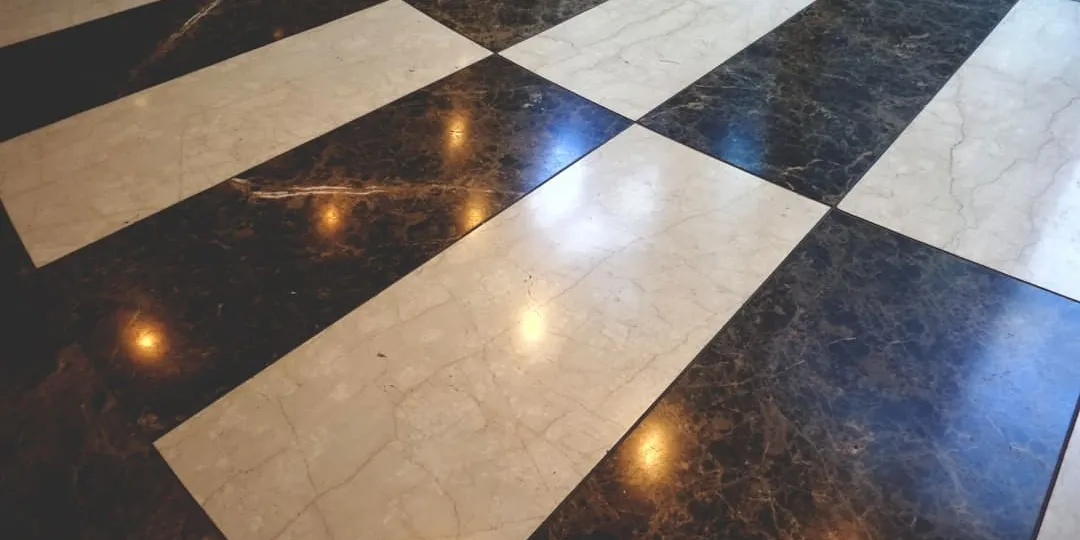
What This Service Involves
Marble restoration in Boca Raton, FL covers floors, countertops, vanities, shower walls, and other marble surfaces throughout your home or business. Boca Stone Restoration grinds, hones, and polishes marble to remove scratches, etching, and wear, then seals it to protect against future damage. Whether you have a dull marble floor in a foyer or an etched vanity in a bathroom, the process restores the original finish — honed or polished — without replacing the stone.
Marble restoration is a multi-step process that removes the damaged top layer of the stone and brings back the finish you want — honed (matte) or polished (glossy). The work starts with grinding down scratches, etch marks, and uneven lips between tiles using diamond abrasives. Once the surface is flat and smooth, we hone it with progressively finer grits until the scratches disappear. Then we polish to the shine level you chose, apply a penetrating sealer, and buff the surface clean.
On floors, this means working across the entire area — not just spot-fixing the worst spots — so the finish is uniform. Spot polishing only creates visible patches of different gloss. On countertops and vanities, the process is the same but scaled down, and we can often complete a bathroom vanity in a few hours. The result is marble that looks like it was just installed, not a patch job.
Restoration is different from cleaning. Cleaning removes surface dirt but doesn't fix scratches, etching, or uneven tiles. If your marble looks cloudy, has dull spots where water sat, or feels rough when you run your hand across it, cleaning alone won't bring it back. Restoration is the only way to remove physical damage from the stone.
When You Need Marble Restoration
The most obvious sign is dullness. Marble that's lost its shine isn't old — it's etched. Etching happens when something acidic touches the surface and dissolves the calcium carbonate that makes up the stone. It looks like a water spot or a dull patch, and you can feel it with your fingernail if it's deep. If your marble countertop has dull rings where glasses sat, or your floor has cloudy patches in high-traffic areas, that's etching.
Scratches are the second sign. Dragging a chair, dropping a heavy object, or sliding something across marble can leave visible scratches. Light scratches come out with honing; deep ones need grinding first. If you can catch the edge of a scratch with your nail, it's deep enough to need professional work.
Uneven tiles — sometimes called lippage — are a third sign. If one tile sits higher than its neighbor and you can feel the lip when you walk across it, the floor needs grinding to level the tiles before polishing. Lippage is common in installations where the setter didn't use a leveling system, and it gets worse over time as the grout erodes.
Stains that won't come out with normal cleaning are a fourth sign. Some stains are on the surface and clean off; others have penetrated the stone and need a poultice to draw them out. If you've tried cleaning and the stain is still there, restoration includes poultice treatment to remove it before sealing.
Why Problems Happen
Marble is calcium carbonate — the same mineral that makes up chalk and limestone. That means anything acidic reacts with it. Wine, citrus, vinegar, coffee, tomato sauce, even hard tap water can etch the surface. The acid dissolves a microscopic layer of stone, leaving a dull spot. It's not a stain — it's physical damage to the stone's surface, and it won't wipe off.
Scratches happen because marble is relatively soft on the Mohs hardness scale — about a 3 out of 10. A steel chair leg (5.5) will scratch it. Even sand tracked in on shoes (7) will scratch a marble floor over time. The softer the stone, the faster it wears in high-traffic areas.
Stains happen because marble is porous. Liquid seeps into the microscopic channels in the stone, and once it's in there, surface cleaning can't reach it. Oil-based stains (cooking oil, cosmetics) and organic stains (coffee, wine, fruit) are the most common in kitchens and bathrooms. Sealing buys time — it fills the pores so liquids can't penetrate as easily — but no sealer lasts forever. Eventually the stone needs re-sealing, and if it wasn't sealed properly in the first place, staining starts early.
What Affects Cost
Square footage is the biggest factor. A 500-square-foot marble floor costs more to restore than a 20-square-foot vanity, and the price per square foot usually drops as the area gets larger — there's a minimum charge for small jobs that covers the time to set up and travel.
The level of damage matters. Light etching and minor scratches come out with honing, which is faster and cheaper. Deep scratches, heavy lippage, or stains that need poultice treatment add time and cost. A floor that needs three grinding passes to level the tiles costs more than one that only needs honing and polishing.
The finish you choose affects the price. A honed finish (matte) is faster to achieve because we stop honing and don't polish. A high-gloss polish takes more passes with finer grits. Some people prefer the matte look for floors because it's less slippery and hides minor wear better; others want the mirror shine on a countertop. The finish doesn't change the quality of the restoration — just the time it takes.
Access and layout matter. A single open foyer is straightforward. A kitchen with islands, a bathroom with tight corners, or a staircase all take more time because the equipment has to work around obstacles. We'll tell you exactly what's involved after seeing the space.
Repair vs. Replacement
Marble can almost always be repaired. Cracked tiles can be filled with color-matched epoxy. Chipped edges can be rebuilt with stone filler and polished to blend. Deep scratches can be ground out. The only time replacement makes more sense is when a tile is shattered into multiple pieces or when the stone is structurally compromised — which is rare.
Cost is the deciding factor for most people. Restoring marble typically costs a fraction of ripping it out and buying new stone, and you keep the slab or tile you already have. New marble isn't cheap, and neither is the demolition and reinstall labor. Unless the damage is catastrophic, restoration is the better call.
There's also the design consideration. If you love the marble you have — the color, the veining, the way it looks in the space — restoration keeps it. Replacement means finding new stone that matches, and natural stone varies from lot to lot. You might not find the same look again. Restoration preserves what you already chose.
Frequently Asked Questions
Can Etched Marble Be Repaired Without Replacing the Stone?
Yes. Etching is surface damage, not structural damage. The acid dissolved the top layer of calcium carbonate, leaving a dull spot. Restoration grinds that damaged layer off and polishes the fresh stone underneath. As long as the etching hasn't gone deep enough to create a pit (which is rare), the repair is invisible. The marble looks new again.
How Long Does Marble Restoration Last?
A properly restored marble floor lasts 10 to 20 years before it needs major work again, depending on traffic and maintenance. Countertops last even longer because they see less wear. The sealer needs reapplying every 1 to 3 years depending on the stone's porosity and how much use the surface gets. Regular dust-mopping (no abrasive cleaners) and prompt cleanup of spills extend the time between restorations significantly.
Will the Restored Marble Match the Unrestored Areas?
If we restore the entire surface — a whole floor, a whole countertop — the finish is uniform. If you only restore part of an area, there will be a visible difference between the restored and unrestored sections. That's why we recommend restoring the full surface, not just the damaged spot. For spot repairs on large floors, we can blend the edge of the restored area, but it's never as invisible as a full restoration.
Can You Restore Marble That's Been Neglected for Years?
Yes. Even marble that's been ignored for a decade — dull, scratched, stained, and uneven — can be brought back. The process takes longer because there's more damage to grind through, but the stone underneath is still marble. We've restored floors that looked unsalvageable and returned them to a polished finish. The only marble that can't be restored is stone that's been structurally cracked through its full thickness, and even then, individual tiles can be replaced before the surrounding area is restored.
Service areas
We provide marble restoration to homeowners and businesses in Boca Raton and the surrounding South Florida communities — including Delray Beach, Deerfield Beach, Pompano Beach, West Palm Beach, Fort Lauderdale, and Boynton Beach. Based in Boca Raton, we offer short response times across the region and the same free estimate regardless of where you're located. Not sure if you're in our range? Call us — we cover most of South Florida.